
Somatic Approaches For Managing Anxiety
Prolonged anxiety is often associated with an elevated stress response, leading to excessive worry, avoidance, and physical symptoms. This blog explores in-depth the physical symptoms of anxiety and how Somatic Approaches can be used to reduce the physiological impact of anxiety
Anxiety and the Body
Anxiety manifests in the body through various physiological responses, primarily due to activation of the sympathetic (“fight-or-flight”) system. When the sympathetic nervous system (SNS) is activated, the body starts to prepare to react to threats. You can almost think of this process as your body stepping on the gas pedal, preparing for action. The amygdala (the brain’s emotional processing center) detects a potential threat (real or imagined) and through sending distress signals across the brain, it activates the SNS, sending adrenaline into the bloodstream. When this happens, the body is ready to do what it needs to protect itself. For example, this could look like having impulses to shout and throw punches (fight) or escape the threat altogether (flight). This process is associated with many physiological changes to prepare the body for action
Common physical symptoms of SNS (gas pedal, fight/flight) activation and their purposes for survival include the following:

If the threat persists (real or imagined), the body starts to release cortisol and this prolongs the fight-or-flight response, keeping the body alert and energized. With repeated and prolonged activation of the SNS, these physical symptoms can manifest as:
Cardiovascular: Hypertension and heart disease
Gastrointestinal: Irritable bowel syndrome, weight gain, acid reflux, ulcers
Immune System: Increased inflammation (worsening conditions like eczema, asthma, and IBS)
Musculoskeletal: Muscle stiffness, migraines, jaw clenching, chronic pain
Neurological: Impaired memory, brain fog, sleep difficulties
Somatic Approaches for Anxiety
Somatic approaches are one way to help regulate the nervous system and alleviate physical symptoms and other manifestations of anxiety.
How Do Somatic Approaches Work?
Somatic approaches rely on present-focused body awareness and physiological regulation to reduce symptoms of anxiety. Using nervous system regulation, somatic therapies recognize that psychological stress is stored in the body and are not just mental experiences.
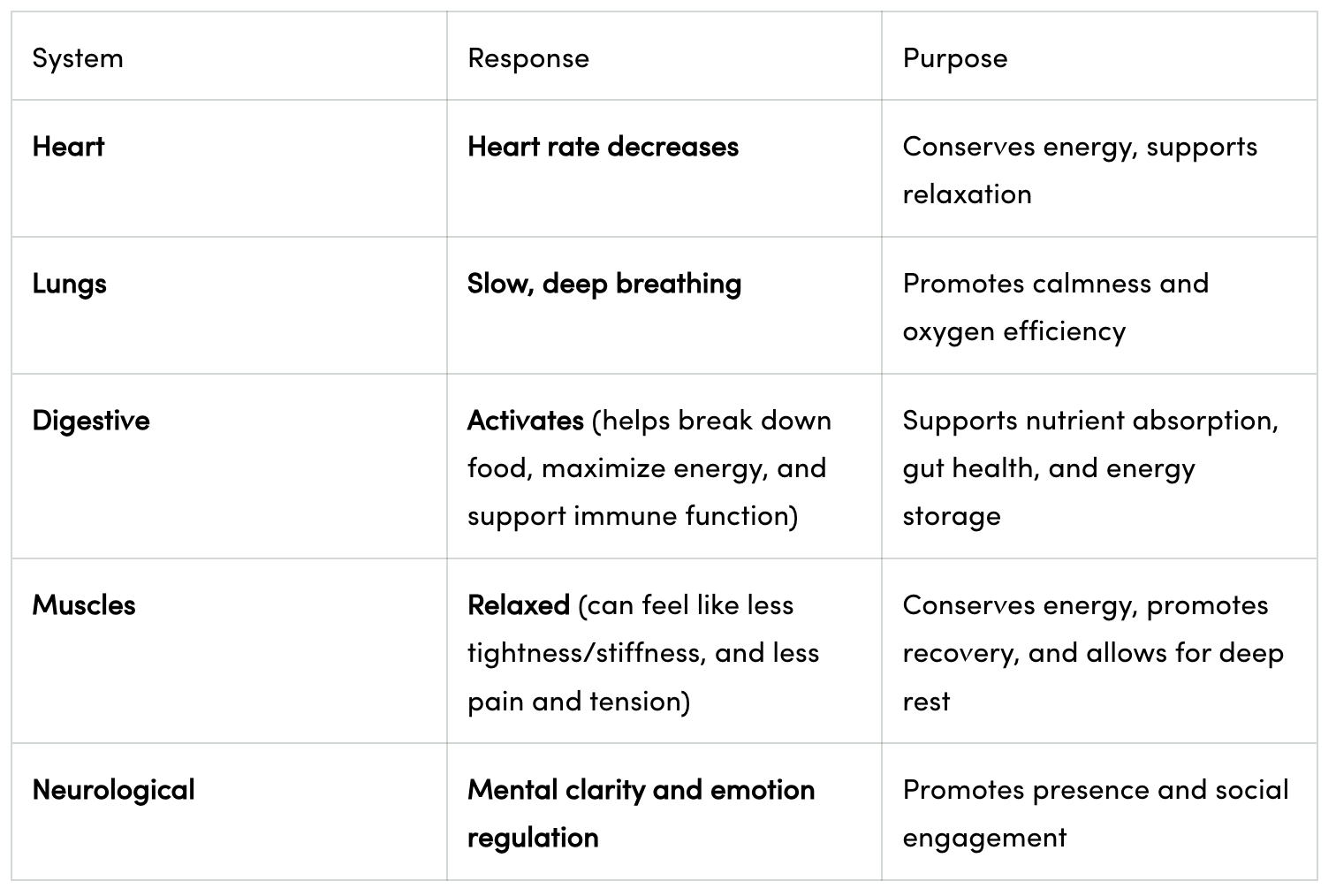
Somatic therapy for anxiety helps by engaging the parasympathetic nervous system (PNS), which is responsible for calming the body after stress, promoting relaxation, digestion, and recovery. You can almost think of PNS activation as your body stepping OFF the gas pedal and onto the brakes. This is why with somatic therapies for anxiety we want to target PNS activation, to reduce those physical symptoms of anxiety associated with a prolonged SNS (fight-or-flight) response. Using somatic therapies, we can activate the PNS (calm) response and reduce the SNS (fight/flight) response.
Physical symptoms of PNS (gas pedal, rest/digest) activation and their purposes for survival include the following:
Regulating with Somatic Exercises
Grounding “5 & 3” Sensory Awareness
Best for: Feeling disconnected, overwhelmed, or anxious
Take a slow, deep breath
Notice and name:
5 things you see (e.g., “the pillow, my dog, a tree…”)
5 things you hear (e.g., “birds outside, my breath, tapping in the distance…”)
5 things you feel (e.g., “my hand on my lap, my back on the couch …”)
Next, find:
3 additional things you see (that you haven’t mentioned yet)
3 additional things you hear (that you haven’t mentioned yet)
3 additional things you feel (that you haven’t mentioned yet)
Body Scanning
Best for: Releasing tension from stress or anxiety
Find a comfortable seat or lie down, noticing your body’s points of contact with the surface you are resting on
Close your eyes and take slow breaths
Bring your attention to your feet – notice any tension, warmth, tingling
Slowly move your focus up through your legs, hips, stomach, back, arms, shoulders, face, and head
If you feel tension, imagine breathing into that area (maybe visualizing a white light as you do so) and gently releasing it on the exhalation
Continue for 2–5 minutes
“Voo” Sound Exercise
Best for: Calming the nervous system, reducing panic, releasing trapped energy
Take a deep inhale through your nose
On your exhalation, make a long, low “Voo” sound like a foghorn
Feel the vibration in your chest and belly
Repeat 3-5 times
Orienting Exercise
Best for: Hypervigilance, dissociation, or feeling overwhelmed/stuck in anxious thoughts
Slowly look around the room and name a few things you notice
Notice what your eyes are drawn to and what you become aware of
Now, take a deep breath and check in to your internal environment as you receive info from your external environment. Are you feeling a little safer now?
Shake It Out
Best for: Releasing tension in the body (jaw, shoulders, stomach)
Stand up
Shake out your arms, legs, and shoulders (whole body) for about 1 minute
Be playful – Wiggle, bounce, or even hum while you shake!
Afterward, stand still and pause. Notice how your body feels.
Benefits of using these strategies:
Regulating the nervous system (shifting from fight-or-flight to rest-and-digest)
Orienting you into the present moment
Increase awareness of where anxiety is stored in your body
Releasing stored tension and trauma (reducing physical symptoms of anxiety)
Increasing interoception (which is the awareness of our own bodily sensations) for self-regulation
Encouraging grounding and safety (helping the brain recognize that it’s not in danger)
Final Thoughts
Anxiety is associated with an activated SNS (fight/flight). Somatic Approaches can help activate the PNS (rest/digest). Practicing present-focused somatic exercises might be one way to reduce the physical symptoms associated with anxiety. At Noia Wellness, we offer somatic approaches to support nervous system regulation.
References
American Psychological Association. (2018, November 1). Stress effects on the body. American Psychological Association. https://www.apa.org/topics/stress/body
Craske, M. G., Rauch, S. L., Ursano, R., Prenoveau, J., Pine, D. S., & Zinbarg, R. E. (2011). What is an anxiety disorder?. Focus, 9(3), 369-388.
Kuhfuß, M., Maldei, T., Hetmanek, A., & Baumann, N. (2021). Somatic experiencing–effectiveness and key factors of a body-oriented trauma therapy: a scoping literature review. European journal of psychotraumatology, 12(1), 1929023.
Levine, P. A., & Frederick, A. (1997). Waking the tiger: healing trauma: the innate capacity to transform overwhelming experiences. Berkeley, CA: North Atlantic Books.